
Independent review: East Bristol Liveable Neighbourhood
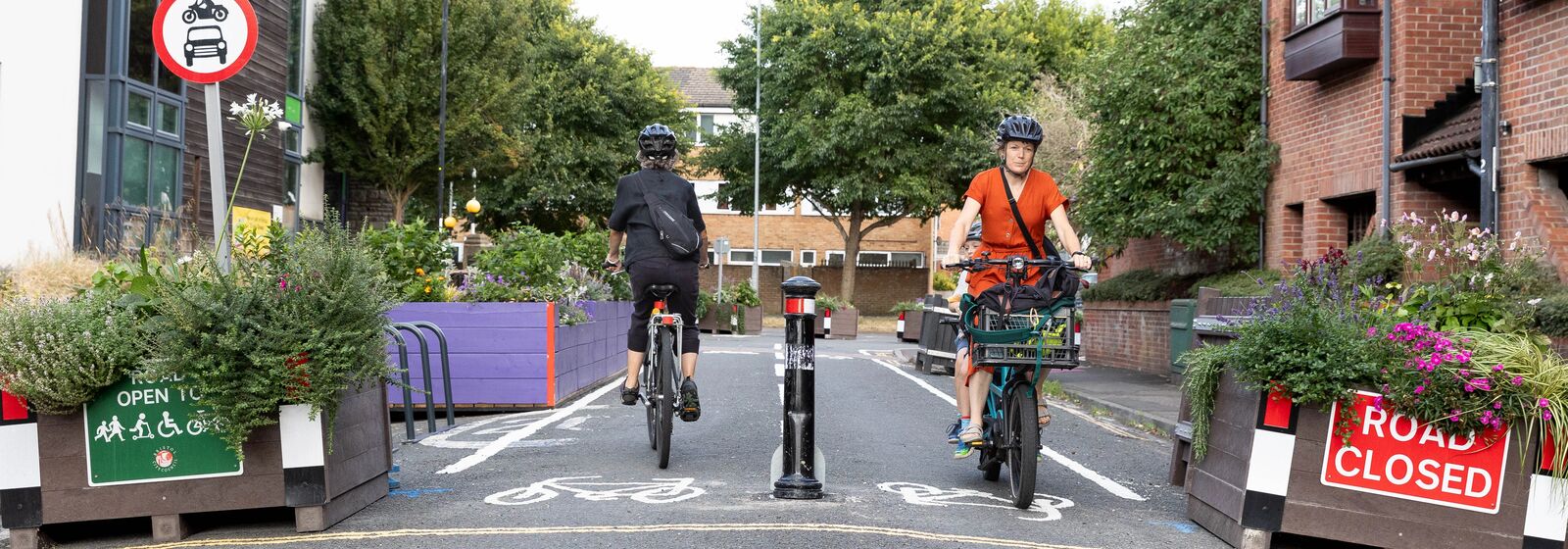 Image credit: Walk, Wheel, Cycle Trust / First Avenue Photography, 2025
An independent report into the East Bristol Liveable Neighbourhood (EBLN) trial has been published. The report was produced by specialist staff from global transport and infrastructure consultancy Steer, with support from an advisory group of academics also from outside of the West of England.
Commissioned by the West of England Mayoral Combined Authority, the independent review into the scheme in Barton Hill, Redfield, and part of St George considered:
- Data and reports from both Bristol City Council and the combined authority
- A professional technical design review, including visits to sites across the trial area
- The Equality Impact Assessment prepared by the council
- An Access Audit review
- Stakeholder interviews with both council officers and Avon Fire & Rescue Service
Helen Godwin, Mayor of the West of England, also asked that a review of related (anonymised) public statements, questions, and correspondence submitted to her/the combined authority was carried out as part of the process - to help ensure that the voices of local people were heard. Further on-street research in the area was also conducted with residents from the Black African and Caribbean community in June 2026, given "some communities and stakeholders felt under-represented or unheard".
The independent review found that "the scheme has achieved some of its transport objectives, but not all objectives have yet been met and some evidence remains mixed or incomplete." It presents a "nuanced picture" through "an early assessment of the trial rather than a definitive long-term evaluation". The report also notes that "some data had been collected soon after the trial had been fully implemented, meaning there has been limited time for behaviour change and longer-term impacts to emerge", while other data relates to periods where "the trial was only partially implemented" - and that "some objectives are not directly measured by the available data".
The data shows:
- An increase in walking and cycling in the area
- An uplift in bus patronage, following the introduction of new services and provision of bus vouchers
- "Substantial reductions in vehicles on internal roads...and reductions in traffic overall, even once counts on major roads are taken account of"
The evidence presented is "more mixed in relation to congestion, journey times, air quality, safety perceptions, high street footfall, satisfaction with the area and equalities impacts", including for Disabled people.
The report also identifies "unintended outcomes" from the scheme, described as "divisive locally" and with the apparent "distribution of positive and negative impacts" described as "uneven". The review assessed "perceptions of the scheme" as "polarised", and considered that "universal support could not be expected". "Some residents report quieter, safer streets and improved wellbeing, while others report increased stress, access difficulties, longer journeys, social isolation or negative impacts on businesses."
The authors are clear that the scheme "was based on a sound policy rationale" and "designed to effect a change in the status quo in the way people travel locally". They go on to say that "any permanent scheme should address the design and accessibility issues identified through this review" and "targeted action to address unintended outcomes" - including "co-designing small and specific local solutions with affected communities" and "exploring additional mitigations for groups experiencing adverse impacts". They found that "any permanent scheme should therefore focus not only on retaining the benefits of reduced through traffic, but also addressing the accessibility, operational, and equalities issues identified through the review." This would, the report says, "better balance strategic transport goals with the lived experience, accessibility needs and trust of local communities".
Though the independent review found that the "area selection was sound", among its 58 recommendations is advice that "future schemes should involve communities earlier in defining the vision". It considered that "engagement was extensive" but should have been "clearer upfront about what communities can influence" and included "co-design of objectives".
The report also recommends that the combined authority takes "a stronger strategic role in active travel scheme development" alongside the "dissemination of good practice between authorities".
The publication of the independent review follows a report being approved by Bristol City Council's Transport and Connectivity committee last month, with amendments approved by councillors - following what the Mayor described as a "measured intervention from local MP Kerry McCarthy" - including:
- A capital budget bid to deliver mitigations to surrounding roads and areas impacted by changes to traffic patterns, including Crews Hole Road, Troopers Hill Road, and other roads that have been shown to have experienced increased traffic volumes
- Developing proposals for a citywide policy for exemptions for bus gates and camera controlled modal filters, noting but not limited to the temporary exemptions agreed in the EBLN area for groups including Blue Badge holders and carers
- Monitoring of the layout, location, and need for the Pile Marsh bus gate before and after the redesign of the Blackswarth Road/Church Road junction, which is to be delivered as a priority - with work in the interim with local residents, the school, and church to consider the need for specific additional exemptions for this bus gate
The Mayor has previously expressed her hope that the report would prove "useful reading" when considering bids for funding for projects like the EBLN or South Bristol Liveable Neighbourhoods, with a consistent approach needed and the recommendations of the report expected to help shape schemes of this kind.


