
Skip to Main Content

The West of England – where talent thrives and opportunity is open to all

Our focus is clear: helping residents gain the skills, confidence and opportunities they need to succeed in work and life, while ensuring employers can access the adaptable, work-ready talent they need to grow and innovate.

This strategy is about both growth and fairness. A more inclusive, joined-up skills system - one that intervenes earlier and better connects people to opportunity - will help businesses grow, raise productivity and support more residents to access and progress in good work.

Ultimately this strategy is about more than skills. It is about building a West of England where opportunities and talent thrive, and where everyone, no matter their age or background, has the chance to fulfil their potential and share in the success of our region.

Headshot of Mayor Helen
Mayor Helen Godwin

Our strengths

+8% working age population by 2035 – growing population and talent pipeline
56% with level 4+ qualifications, v 46.8% nationally – highly skilled workforce
0.95 jobs per resident – strong job density, more than national average
80.1% residents with jobs – high employment rate
+19% in jobs since 2016 – strong employment growth in key sectors

Our challenges

1600 16–17s not in education, work or training (including activity not known)
36.3k+ out of work due to long-term sickness (up by 10k since 2018)
20.9% of free school meals pupils progress to higher education
42k live more than 30 minutes from jobs by public transport
3% of lower income young people from Bristol North West go to university
11k women affected by the employment gap

Skills strategy pillars

Empower residents with the skills to access jobs that will shape our future. We’ll build a future-ready, diverse workforce that drives innovation, strengthens our everyday economy, and ensures no one is left behind.


Our priorities for young people

Clear career pathways into academic, technical and vocational routes in our growth sectors

We will develop a West of England digital front door to help young people see the opportunities across our growth sectors and the pathways into them. It will show not just what careers exist, but how to get there - mapping subjects, qualifications, courses and the wider skills and experiences employers value.

NEET prevention and reduction through earlier intervention and coordinated support

Our ambition is to become the UK’s first NEET zero region leading the way in preventing and reducing youth disengagement by demonstrating what a modern, joined-up, place-based approach can achieve.

The West of England NEET Taskforce brings together partners across the system to drive a focused, outcomes-led approach built around three core phases: research and peer-led engagement, community-led solutions and employer-led opportunities.

Work readiness so young people develop the confidence, behaviours and skills to thrive

The West Bacc will be an accredited work-readiness certificate for 16–18-year-olds in participating schools, sixth forms, colleges and training providers. It will be developed over the next 18 months with employers, colleges, schools and wider partners.

Our priorities for adults

Tackling the barriers that hold people back

Transport is one of the biggest barriers to opportunity across the West of England. For some people, long and unreliable journeys can shape their day before it has even begun, leaving them tired, stressed and less ready to learn.

Many barriers sit beyond skills alone. Health, housing, childcare, digital access, financial insecurity and transport, especially for rural residents and those working outside standard hours, all shape people’s ability to work.

Supporting people to stay in work

Keeping people in work is vital to reducing economic inactivity. Around 300,000 people leave work each year because of a health condition, often because timely support and workplace adjustments are absent, yet early intervention can usually prevent job loss.

We will make the West of England a Keep Britain Working vanguard region, helping to shape and test new approaches to workplace health, inclusion and retention.

Building an integrated system

We are clear that employment support must be devolved so services can respond to the needs of our residents and employers.

In preparing for further devolution, we will develop a West of England model built around a single, recognisable regional offer with a connected family of programmes beneath it. This will be a coherent system, not a single programme, underpinned by shared principles, outcomes and ways of working.

Our priorities for lifelong learning

Skills for the future economy

Our priority is not just more training but training clearly linked to jobs, progression and sector demand. Provision must be adaptable to evolving economic needs; the skills important today will change, and we will support that shift.

Flexible, modular and lifelong learning

We will shift how learning is delivered so it is flexible, employer-led and enables people to build skills over time. The current system is too rigid and fragmented, making it hard for employers to access relevant training and for individuals to fit learning around work and life.

Responding to automation and displacement

Automation, AI and wider technological change are reshaping jobs across the West of England. The pace of change is accelerating and some roles will shift or decline. Our system must support both upskilling and smooth transitions between roles and sectors.

Building the workforce our growth sectors need

Our priority sectors are central to the region’s future, driving growth, innovation and productivity while creating opportunities for residents.

wind turbine
Clean energy

We are home to around 400 companies working in clean energy industries. Over the next decade, we will grow the sector at pace, including tidal, floating offshore wind and nuclear energy, positioning the West of England at the heart of the UK’s clean energy revolution.
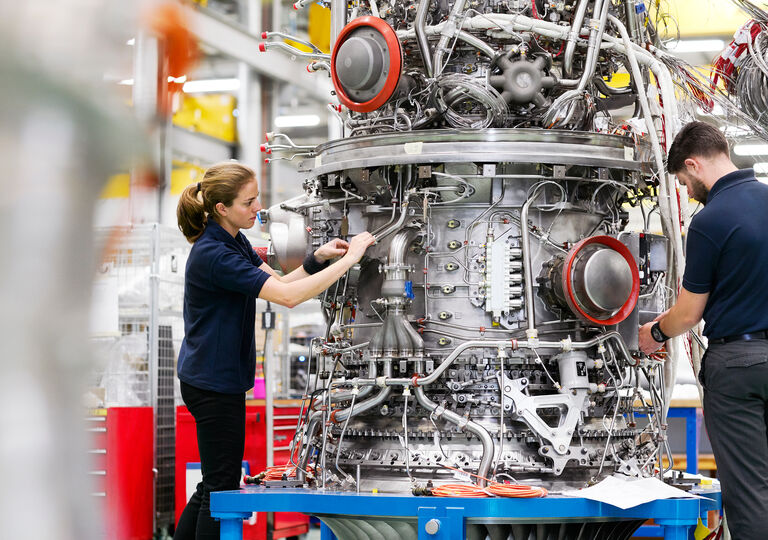
Two engineers working on civil aerospace engine Advanced Low Emission Combustion (ALECSYS), in Bristol, United Kingdom Image credit: Roll's Royce
Advanced manufacturing

The West of England has one of the UK’s most advanced manufacturing ecosystems, with strengths in aerospace, robotics, and high value engineering. The sector contributes around £2.9bn to the economy and supports 17,800 jobs, with productivity growth outpacing most other regions.

cables
Digital & technologies

The West of England is a major hub for digital and technology industries, with strengths in AI, cyber security, advanced computing and engineering. The sector contributes around £3.8bn to the economy and employs over 64,000 people, with employment growing by more than 50% since 2015, the fastest of any combined authority.

large lit up inflatable spheres at night Image credit: Freia Turland
Creative industries

The West of England has a fast growing and globally recognised creative sector, spanning film, TV, gaming, design and digital content. The sector supports around 40,000 jobs and has seen employment grow by over 80% since 2015, one of the fastest growth rates in the UK.

a person serving someone in a cafe
Everyday economy

The everyday economy is the foundation of the West of England’s success. It is the part of our economy that keeps the region functioning day to day, supports families to live and work, and underpins growth across all sectors.

How we will deliver: Partnership and collaboration

Putting people first – a system designed around what residents and employers need, not how services are organised today. Right support, at the right time, in the right place.

The skills system depends on coordinated action across education, employment, business, communities and local government. No single organisation can deliver the strategy alone. We will align partners around shared priorities, clearer pathways and better intelligence to deliver stronger outcomes for residents and employers.

Alongside the wider reforms and long-term direction set out throughout this strategy, these are some of the major flagship initiatives that will help drive change across the West of England skills system:

  • Careers & Pathways Digital Platform
  • NEET Zero & Regional NEET Taskforce
  • West Bacc
  • Careers Advice from Primary School
  • Get West of England Working
  • Becoming a Keep Britain Working Vanguard
  • Apprenticeships for Growth
  • Digital & AI Skills for All
  • Mayor’s Everyday Economy Fund
  • Mayor's Youth Support Fund
  • ESOL for Opportunity

This skills strategy translates that priority and the headline actions we set out in 2035, setting a clear route forward for how our skills system will evolve to meet the changing needs of our residents, employers and economy.